Introduction
The phrase “Operation Bunyan-um-Marsoos” has appeared in news reports, military briefings, and social media in recent years, frequently referring to Middle Eastern conflict areas. The phrase sounds cryptic to many, but it holds deep linguistic, cultural, and strategic significance.
In
this blog, we break down what “Bunyan-um-Marsoos” really means, its origins, and why it has been associated with various military campaigns, particularly those involving Islamic militant groups like ISIS.
What Is the Literal Meaning of Bunyan-um-Marsoos?
The phrase “Bunyan-um-Marsoos” is Arabic in origin. It literally translates to:
“A solid, cemented structure” or “A compact, reinforced wall or structure.”
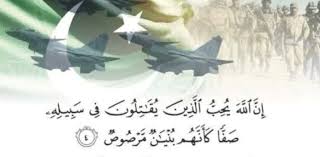
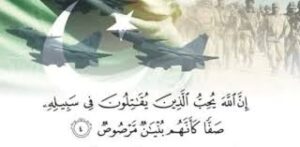
It originates from Surah As-Saff (61:4) in the Holy Quran:
In point of fact, “Allah loves those who fight for His cause in rows like a solid structure.” (Qur’an 61:4 — “Ka’annahum Bunyanun Marsūs”)
This verse metaphorically praises unity, discipline, and strength among believers, comparing them to a tightly constructed wall—unshakable and cohesive.
Operation Bunyan-um-Marsoos: Who Used It and Why?
The Use by ISIS (Daesh)
The term “Operation Bunyan-um-Marsoos” gained global attention when ISIS (also known as Daesh) announced a campaign by that name. It was used to represent a military initiative involving coordinated attacks, often portrayed as a response to international or local offensives against their territories.
By naming their operation after this Quranic metaphor, ISIS aimed to:
Invoke religious legitimacy and spiritual authority.
Symbolize their internal unity and military discipline.
Inspire followers and recruits by linking the campaign to a Quranic concept of divine warfare.
However, critics and scholars widely reject such usage, labeling it as manipulative misinterpretation of religious texts for violent and political agendas.
How Has the Term Been Perceived Globally?
1. Religious Communities
Mainstream Islamic scholars strongly condemn the use of Quranic terms like “Bunyan-um-Marsoos” for violent purposes. They emphasize that the verse promotes spiritual solidarity, not terrorism.
2. Media and Military Analysts
Analysts and journalists frequently view “Operation Bunyan-um-Marsoos” as propaganda, a psychological strategy to instill in militants a sense of divine mission and martyrdom. 3. The broader public To many outside the Arabic-speaking world, the term sounds foreign and mysterious. This has helped militants exploit its ambiguity for fear and mystique.
Other Examples of Quranic Terms Used in Conflicts
The use of religious phrases in naming military operations is not new. Several groups have used terms from holy texts to add ideological weight to their actions. Examples include:
“Operation Ghazwa-e-Hind” — cited by militant groups targeting South Asia.
“Fajr al-Islam,” or “Dawn of Islam,” is a term utilized by Syrian factions. “Operation Khaibar” — referencing the Battle of Khaibar from Islamic history.
This pattern shows a clear strategy: using historical or religious symbolism to galvanize fighters and create perceived moral authority.
Why Is It Important to Understand These Terms?
Understanding phrases like Operation Bunyan-um-Marsoos is critical for several reasons:
Security Insight: Helps governments and analysts predict the psychological and ideological strategies of extremist groups.
Public Awareness: Educates the global audience about the true meanings behind religious texts, reducing fear and misinformation.
Counter-Radicalization: Clarifies how certain ideologies are misappropriated for violence, aiding de-radicalization efforts.
Final Thoughts
Operation Bunyan-um-Marsoos is more than just a name. Extremist groups have repurposed a Quranic phrase meant to evoke unity and strength in order to advance their violent agendas. It is a calculated use. As global citizens, understanding the meaning, origin, and implications of such terms helps us separate fact from propaganda, and religion from radicalism.
Frequently Asked Questions (FAQs)
1. Is “Bunyan-um-Marsoos” a violent term?
No. In its original context, it symbolizes unity, discipline, and strength among believers. It does not promote violence.
2. Why did ISIS use this term for a military operation?
They used it to add religious symbolism and justify their military actions by linking them to Islamic concepts.
3. What does this phrase teach us today?
It shows how words—especially religious ones—can be powerful, and why it’s crucial to understand their original meaning before accepting their use in political or military contexts.
SEO Keywords Included
What is Operation Bunyan-um-MarsoosWhat is Operation Bunyan-um-Marsoos
Meaning of Bunyan-um-Marsoos
Arabic military terms explained
Quranic military metaphors
ISIS propaganda strategies
Bunyan Marsus definition
Terrorist operation names meaning
Operation names from Quran