Introduction
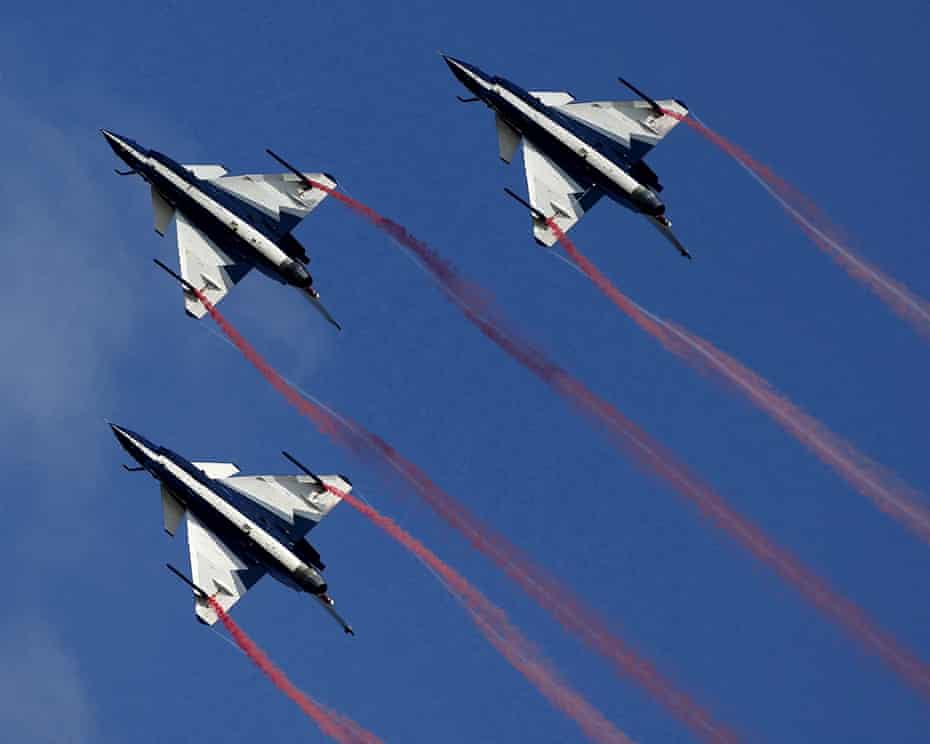
Let’s face it—military tech is no longer just about muscle; it’s about precision, speed, and, above all, strategy. Pakistan’s adoption of the Chinese J-10C fighter jet isn’t just a routine defense upgrade. It’s a calculated move, sending ripples through South Asia and beyond. Why? Because this jet, paired with its Chinese-built missile systems, doesn’t just fly—it intimidates. It marks a milestone in Pakistan’s defense evolution and showcases how potent Chinese weaponry has become on the modern battlefield.
What Is the J-10C Fighter Jet?
Evolution of the J-10 Series
The J-10 has come a long way. Developed by Chengdu Aircraft Corporation, this multirole combat jet started off as China’s answer to fourth-gen Western fighters. But with the J-10C variant, China has moved up the food chain—offering advanced avionics, stealth features, and a weapon system that can keep up with the best.
Key Specifications of the J-10C
Think of the J-10C as a nimble predator. It’s powered by an upgraded WS-10B turbofan engine, reaches speeds above Mach 2, and has a combat radius of around 1,000 km. Not only is it fast and agile, but it also carries a heavy payload: precision-guided munitions, air-to-air missiles, and more.
Radar and Stealth Capabilities
One of the J-10C’s party tricks is its AESA (Active Electronically Scanned Array) radar. This isn’t just for show—it can track multiple targets, resist jamming, and support long-range missile engagements. Add in some radar cross-section reduction and you’ve got a semi-stealthy warbird capable of striking before it’s even seen.
The Strategic Rationale Behind Pakistan’s Acquisition
Filling the Air Superiority Gap
Pakistan’s air force, while capable, needed a platform to bridge the tech gap with neighbors—especially India. The aging fleet of F-7s and Mirages had to be replaced. Enter the J-10C: a modern, cost-effective solution.
A Counter to Indian Rafales
India’s induction of Rafale fighters tilted the regional air power equation. To counterbalance, Pakistan didn’t just need new jets—it needed ones that could stand toe-to-toe with Rafales. The J-10C, with its PL-15 missiles and AESA radar, is arguably the best non-Western contender.
Chinese Weaponry Integration in J-10C
PL-10 and PL-15 Missiles
These are not just ordinary missiles—they’re game changers.
PL-10: Close-Combat Excellence
This short-range infrared-guided missile is deadly in dogfights. With thrust-vectoring and helmet-mounted targeting, it allows pilots to fire even when the enemy isn’t directly ahead. It’s like punching sideways in a fistfight.
PL-15: Long-Range Threat Dominator
This is where things get scary. The PL-15 is a beyond-visual-range missile with a reported range exceeding 200 km. Its active radar guidance means it can strike aircraft that can’t even see it coming.
Pakistan’s Growing Reliance on Chinese Defense Tech
Beyond Fighters: Drones, Missiles, and More
Pakistan isn’t just buying planes—it’s investing in an entire ecosystem. From Wing Loong drones to HQ-9 air defense systems, the Chinese footprint in Pakistan’s military is deepening. It’s not just a buyer-seller relationship anymore—it’s a partnership.
The Message to the Region
Power Projection or Defensive Posture?
Some argue this is about defense, others see it as a flex. Realistically, it’s a bit of both. The J-10C gives Pakistan a modern air fleet that can deter threats and maintain strategic balance without escalating tensions—unless provoked.
Comparing the J-10C with Regional Fighters
J-10C vs. Indian Rafale
The Rafale is more expensive, battle-tested, and boasts advanced ECM. But the J-10C punches above its weight with similar radar and missile capabilities—especially the PL-15’s longer range compared to Meteor missiles.
J-10C vs. F-16 (in PAF)
The F-16 remains a core asset for Pakistan. However, J-10C’s integration with Chinese missiles offers a different playbook. It’s less about replacing and more about complementing.
Real-World Drills and Exercises
Operational Readiness of J-10C Squadrons
Pakistan has already integrated J-10Cs into its 15th Squadron, and they’ve been seen conducting joint drills and live-fire tests. Early feedback from analysts? Impressive response time, effective command integration, and smooth Chinese system adaptation.
Global Implications of the Pakistan-China Military Bond
Strategic Axis in Asia
This isn’t just about jets. The closer defense cooperation signals a strategic axis forming between Beijing and Islamabad. In a world where alliances are fluid, this one seems increasingly solid—and consequential for regional geopolitics.
Potential Challenges in Chinese Systems
Maintenance and Training Requirements
Let’s be honest—not everything’s perfect. There are concerns about long-term maintenance, supply chain dependencies, and training needs. Chinese systems require tailored logistics and significant doctrinal adaptation—something Pakistan is still navigating.
What Lies Ahead for Pakistan’s Air Force?
More J-10Cs are expected, along with newer drone systems and AI-backed command networks. The vision? A tech-savvy air force that can not only defend but dominate. The J-10C is just the beginning of that shift.
Conclusion
Pakistan’s decision to field the J-10C, equipped with cutting-edge Chinese missiles, is more than a hardware upgrade—it’s a signal. It tells the world that Chinese weaponry is not only exportable but effective, competitive, and increasingly influential. From stealth radar to long-range missiles, the J-10C represents the sharp edge of a broader strategy—one where Beijing and Islamabad are clearly flying in formation.
FAQs
1. Why did Pakistan choose the J-10C over other jets?
Pakistan needed a cost-effective, technologically advanced fighter that could counter India’s Rafales. The J-10C fit the bill with its AESA radar, PL-series missiles, and regional political compatibility.
2. How do the PL-15 missiles compare to Western missiles?
The PL-15’s reported range exceeds many Western counterparts, including the AIM-120 and even the Meteor. It’s a serious contender in long-range air combat.
3. Can the J-10C match the Rafale in combat?
While the Rafale has superior avionics and combat history, the J-10C holds its own with comparable radar tech and missile firepower. In a dogfight, it would come down to tactics and training.
4. Is Pakistan completely moving away from Western arms?
Not entirely. The country still operates F-16s and relies on some Western tech. However, it’s increasingly leaning toward Chinese systems for cost, support, and political alignment.
5. Will China continue supplying advanced weapons to Pakistan?
Absolutely. Their defense partnership is only growing, and future deals may include newer drones, naval platforms, and next-gen stealth tech.